
Case study: furniture import from Türkiye
This is what a fully documented due diligence case looks like in Woodguard – from the raw material source to the closing action. Every company, number and figure on this page is fictional.
The case
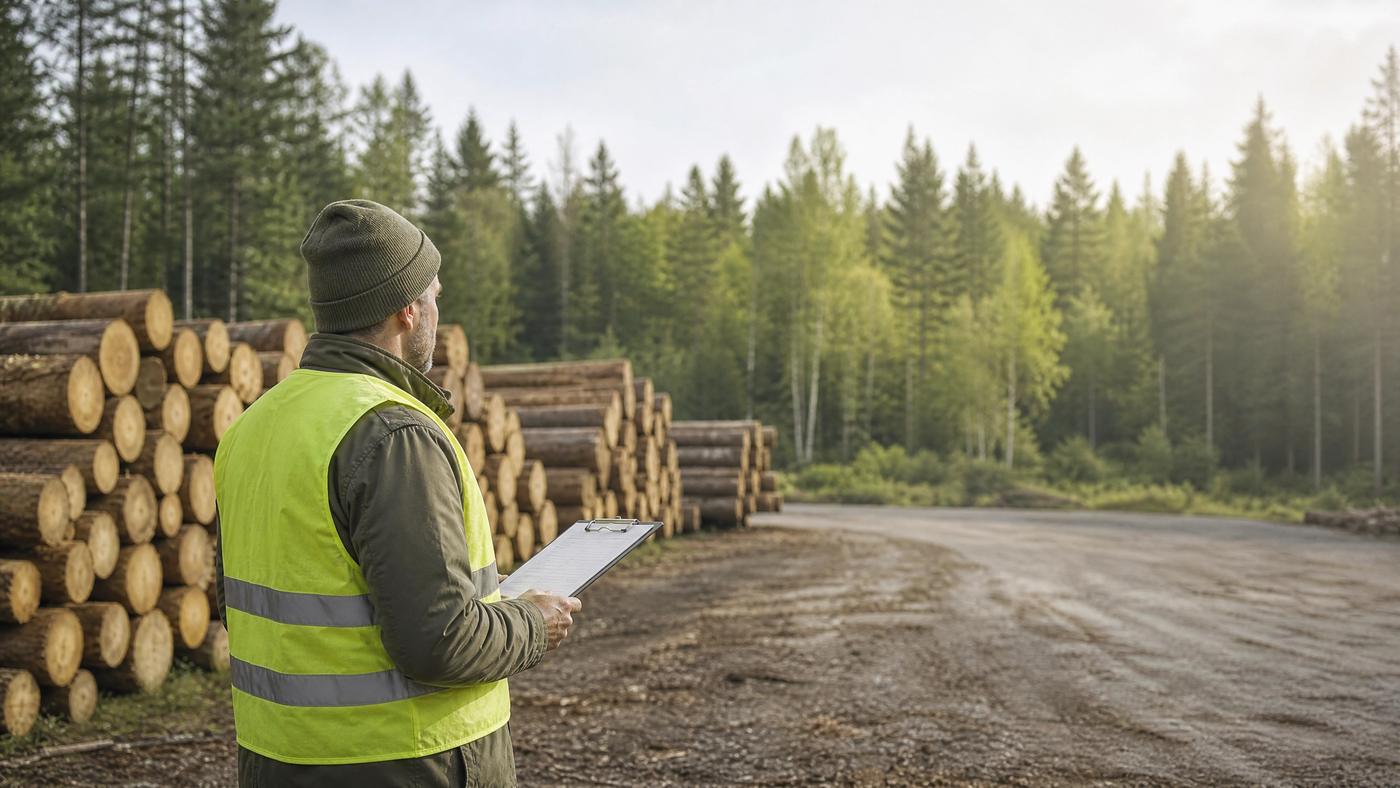
A German furniture manufacturer buys residential furniture from a Turkish exporter. The timber comes from state-managed forest, is processed into wood-based panels, made into furniture in İnegöl and exported via İstanbul. Four value-chain tiers, three declarations, one supplier audit, 25 records.
Woodguard brings this information together, checks it against the EUDR requirement areas, assesses the risk and keeps the picture current. The views below show what that produces.
Key figures of the example
- CaseTR-IMPORT-2025-0117
- OperatorNordholz Wohnwerke GmbH & Co. KG (fictional)
- Country of productionTürkiye
- CommodityHS 9403 · wooden furniture
- ValueEUR 28,950.00
- Quantity11,480 kg · 390 packages
- Analysis created20 October 2025
- Delivery4 November 2025
- Value chain tiers4
- Records in the file25
- Net overall risk1.9 out of 5 (low)
- Open actions6 (2 at priority 1)
The outcome of the example
For the delivery that took place, the evidence is complete and the risk of illegal harvesting is assessed as very low. Two points remain open and concern future imports: plot-level coordinates of the harvesting areas, and the importer's own documented due diligence system. Both are recorded as priority 1 actions.
Net overall risk
low
Residual risk
after the actions are closed
Evidence completeness
23 of 25 documents
Actions
with deadline and owner
How the views map onto the process
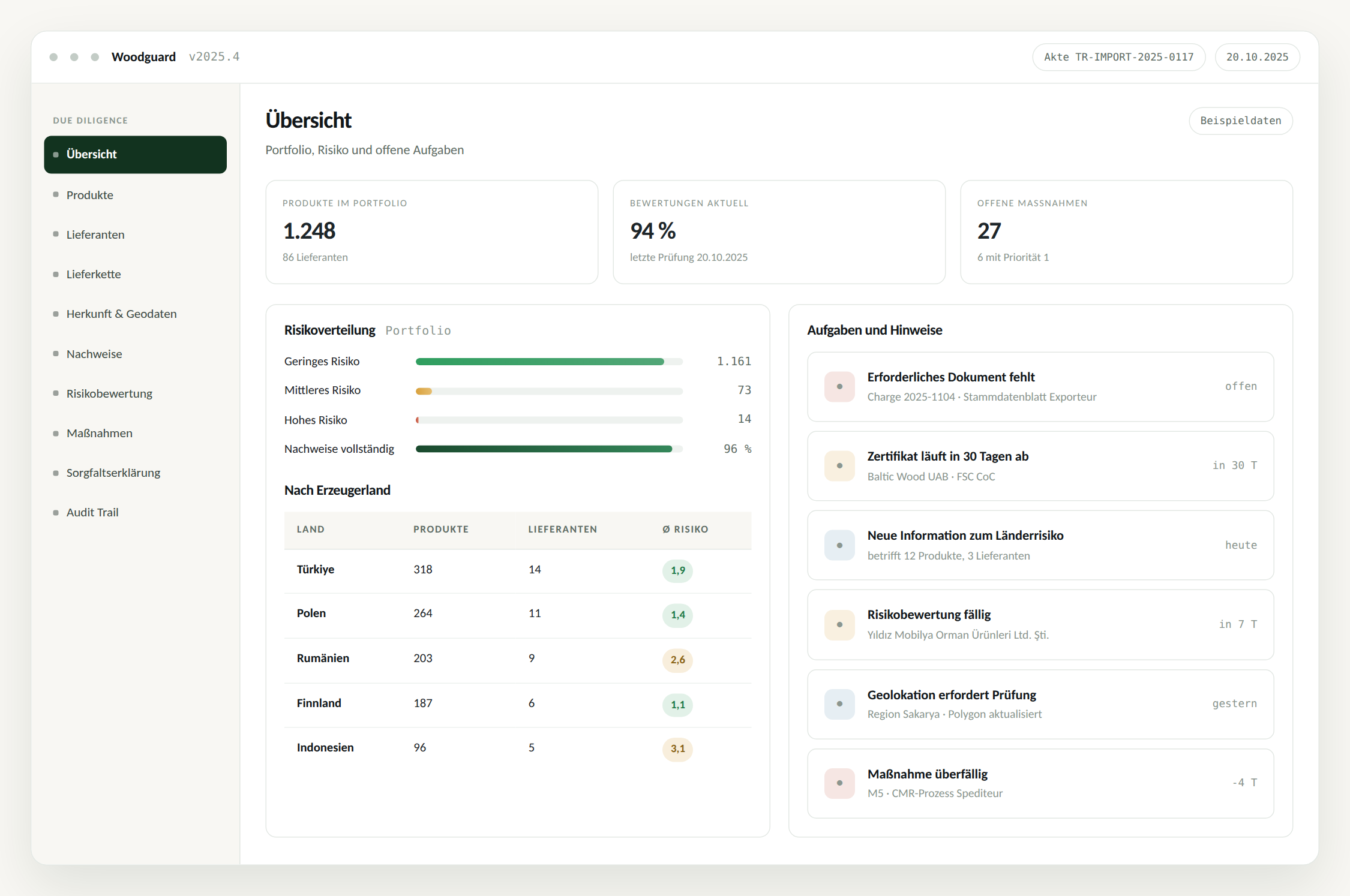
Portfolio overview
The entry point shows a state rather than a folder: risk distribution across 1,248 products, evidence completeness, open tasks and notifications that need a response. The case shown here is one of 318 from Türkiye.
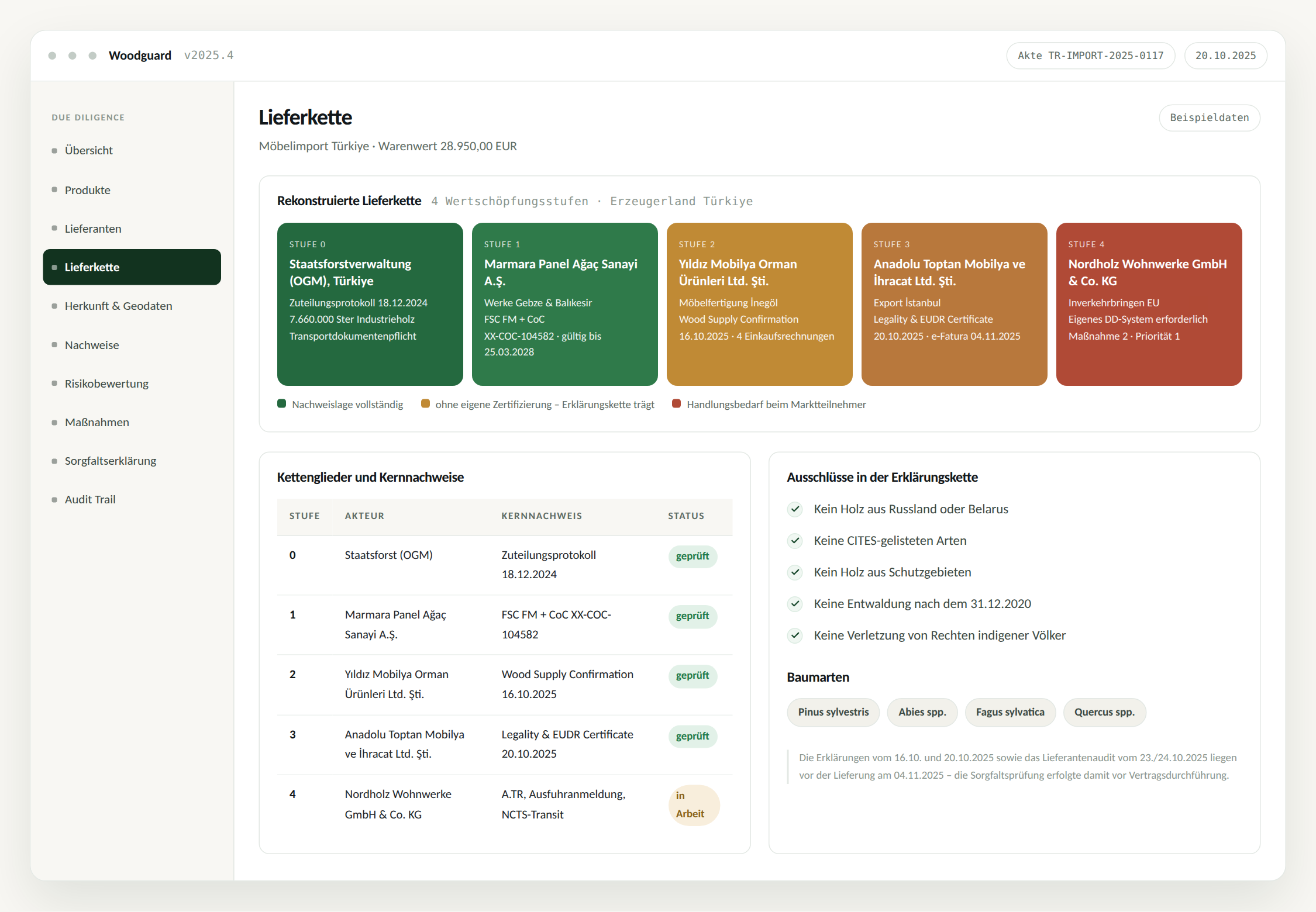
The reconstructed supply chain
Four tiers from state forest to placing on the EU market – each with its own key record, status and risk effect. Colour shows where the evidence carries and where action is required.
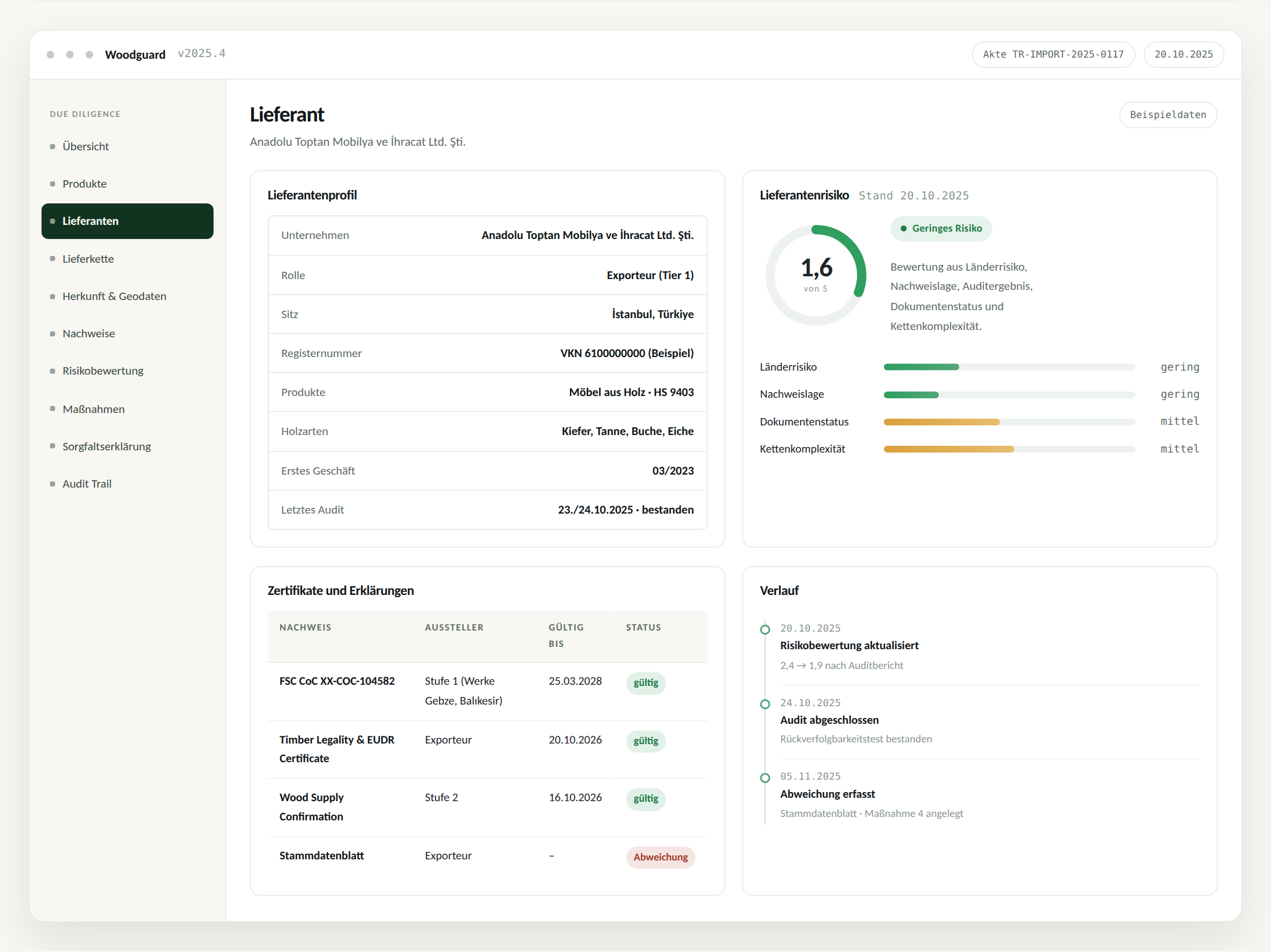
The supplier profile
Every actor in the chain gets a profile: master data, products, species, certificates, audits, deviations and a supplier risk score with visible reasoning – including history over time.
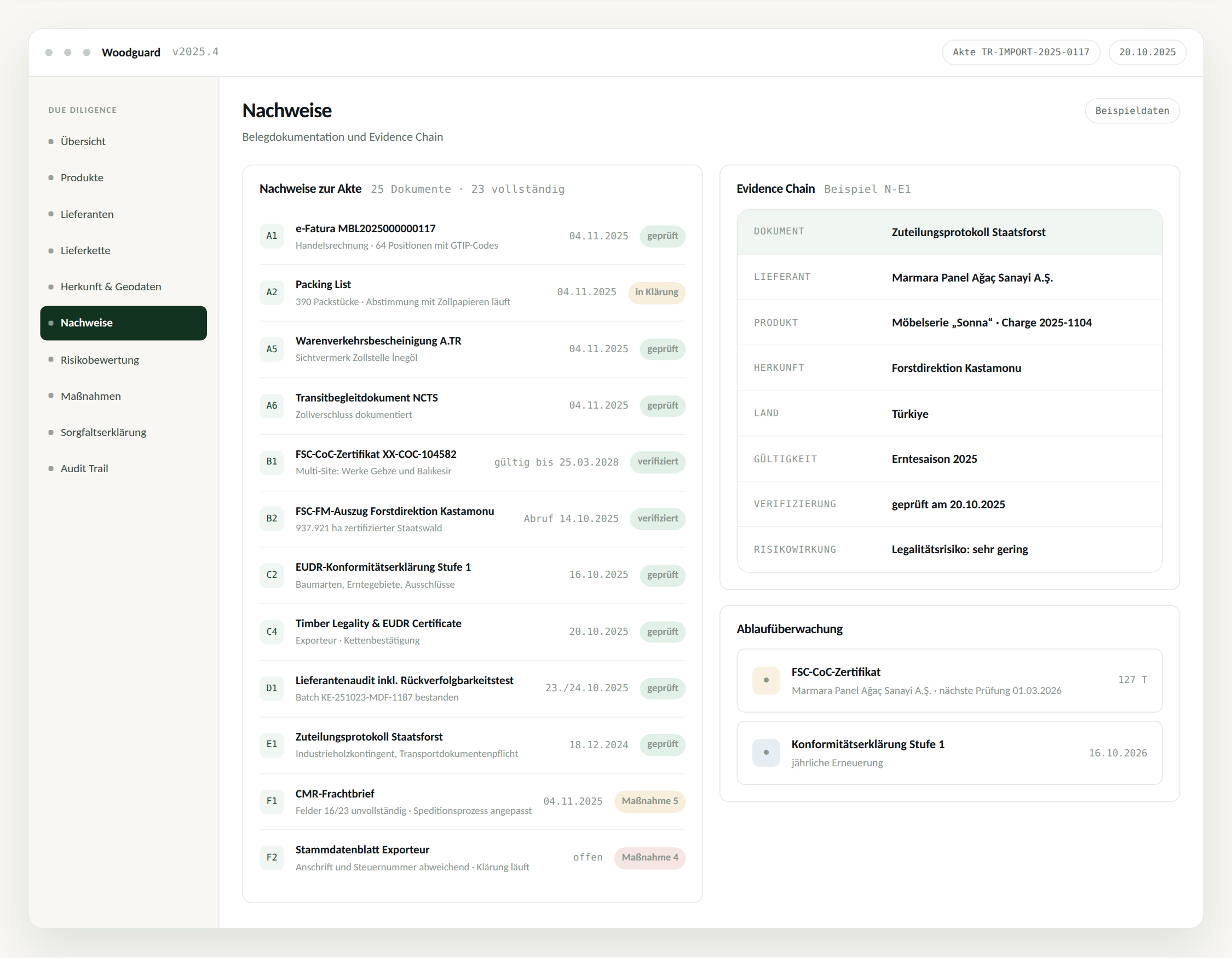
Evidence and evidence chain
25 documents, each with type, validity, verification status and links to product, supplier and origin. Two deviations are recorded and tied to the action that closes them.
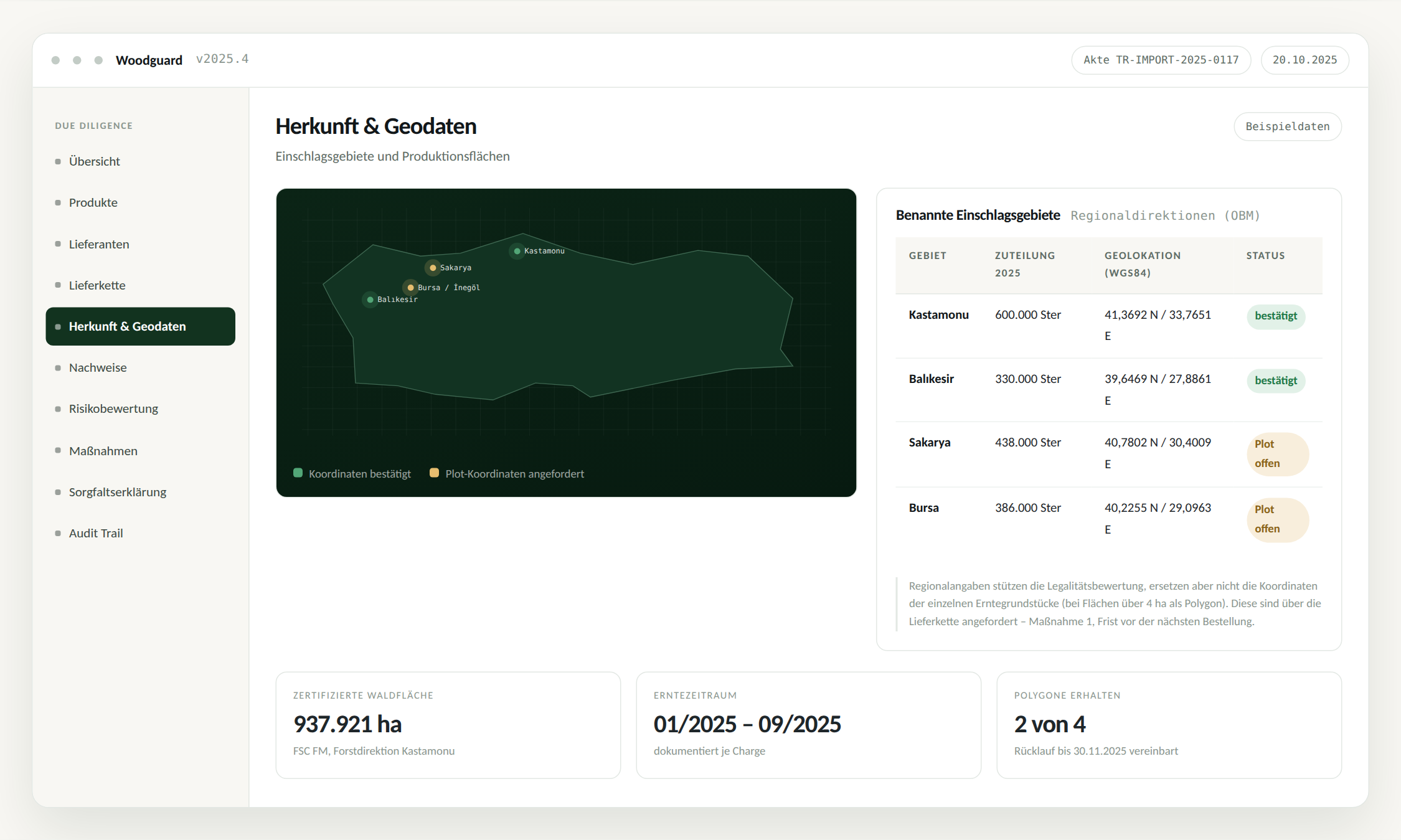
Origin and geodata
The named harvesting regions with allocated volume and coordinates. Regional data supports the legality assessment but does not replace the coordinates of the individual harvesting plots. That gap is visible and has a deadline.
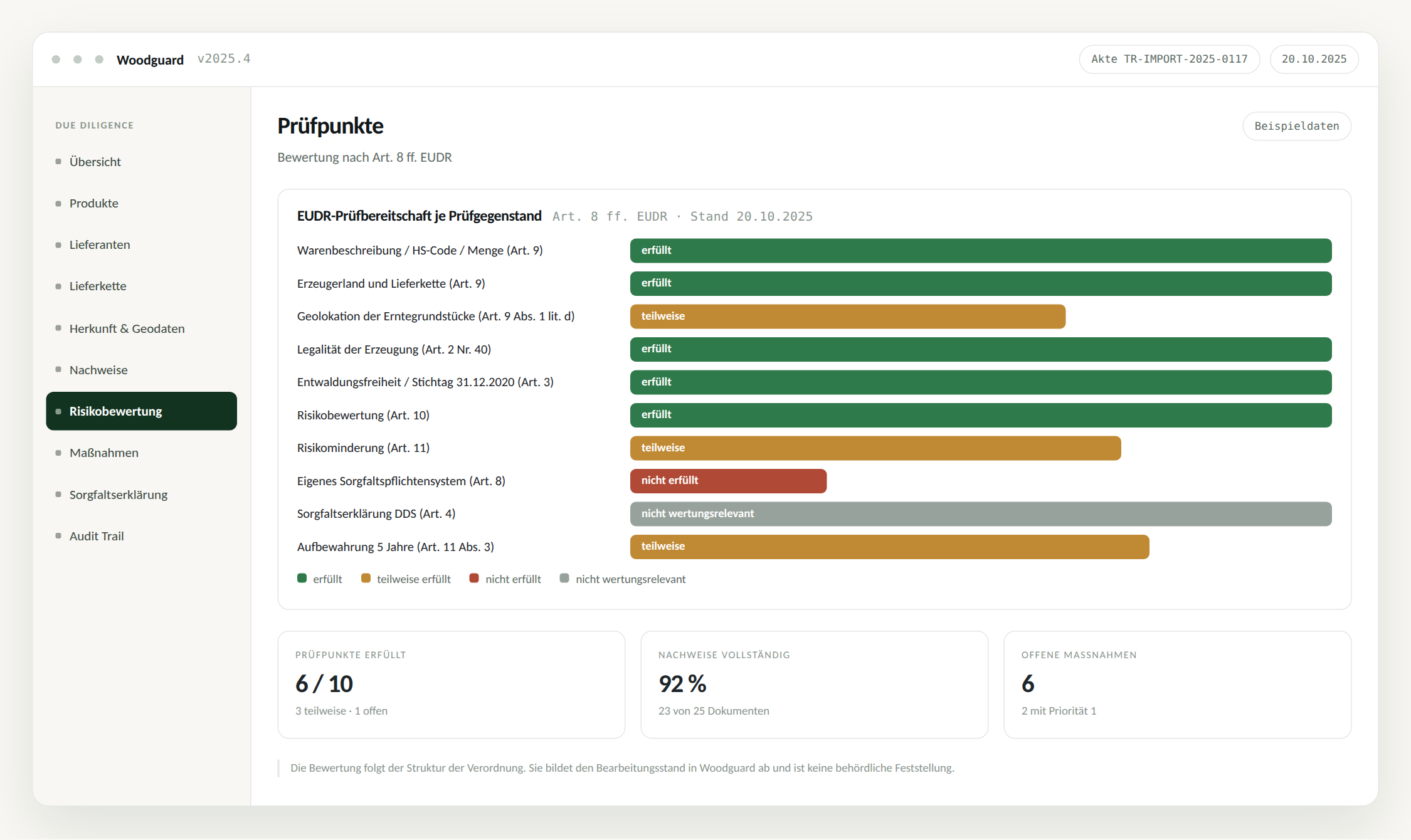
Checkpoints under Art. 8 ff. EUDR
The assessment follows the structure of the regulation: product description, country of production, geolocation, legality, deforestation-free status, risk assessment, mitigation, own due diligence system, due diligence statement and retention.
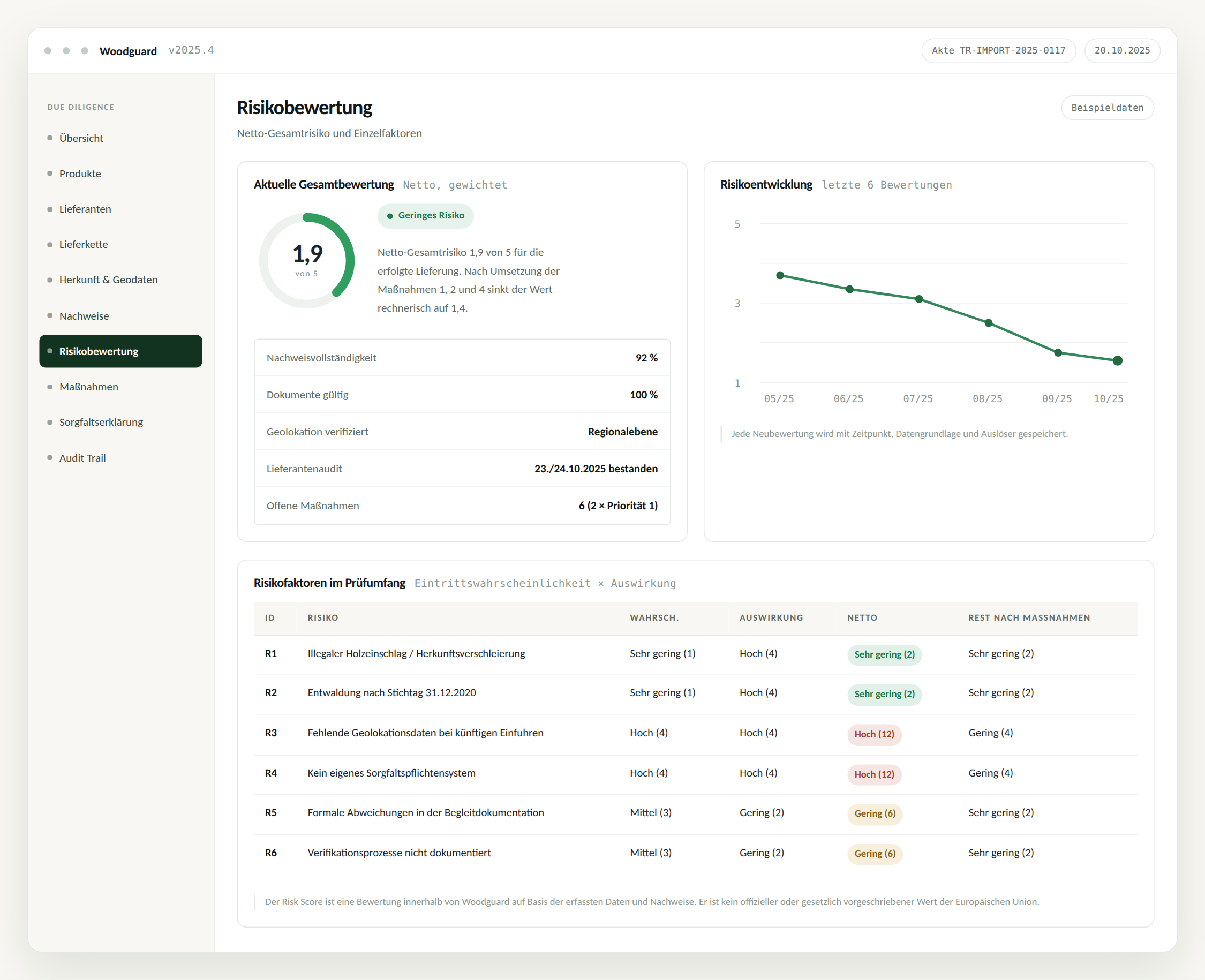
Risk assessment with reasoning
Six named risk factors with likelihood, impact, net value and residual risk after mitigation. The trend shows how the assessment moved with every record received.
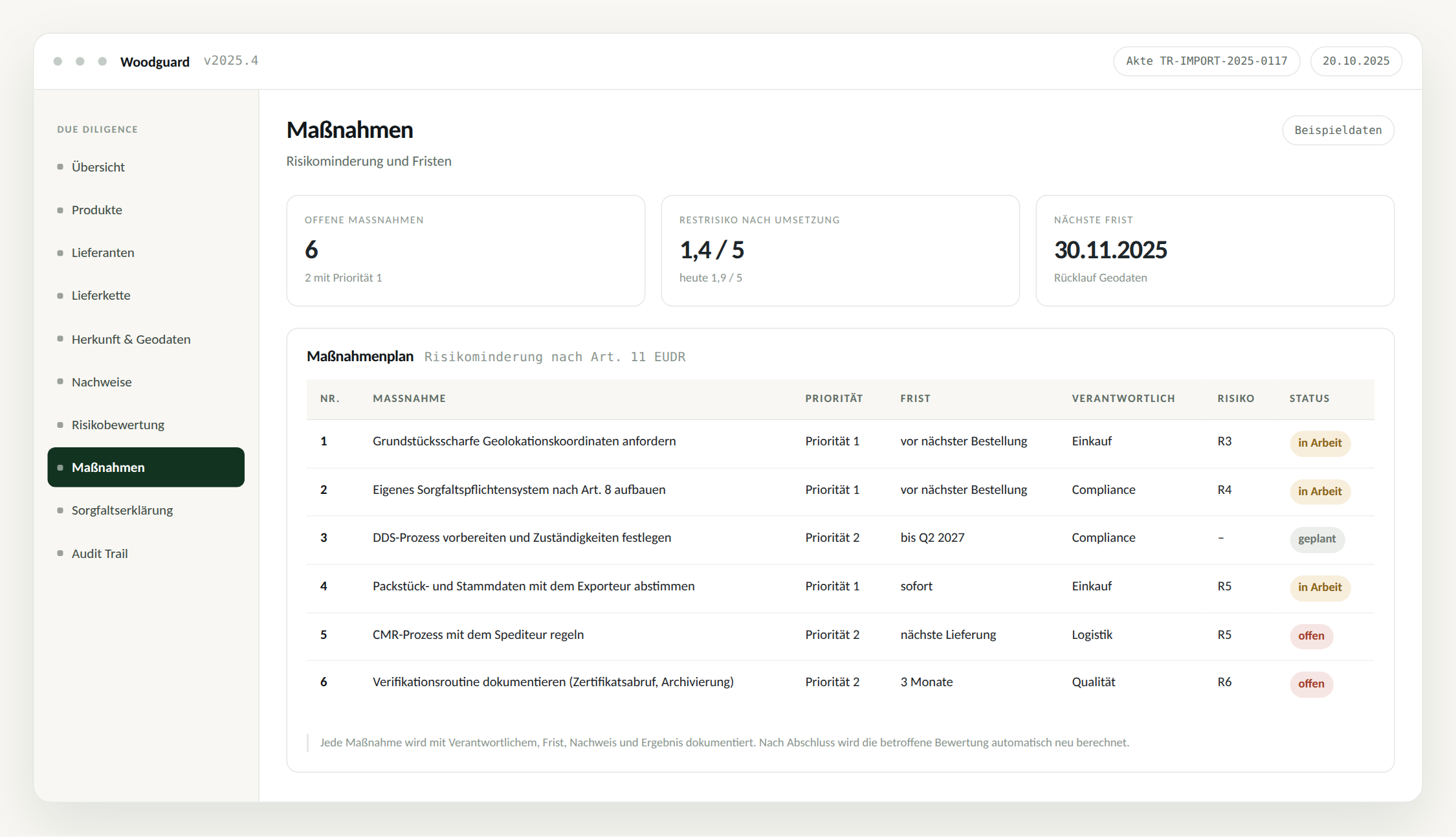
Action plan
Every gap becomes a task: action, priority, deadline, owner and the risk it pays into. Once closed, the affected assessment is recalculated.
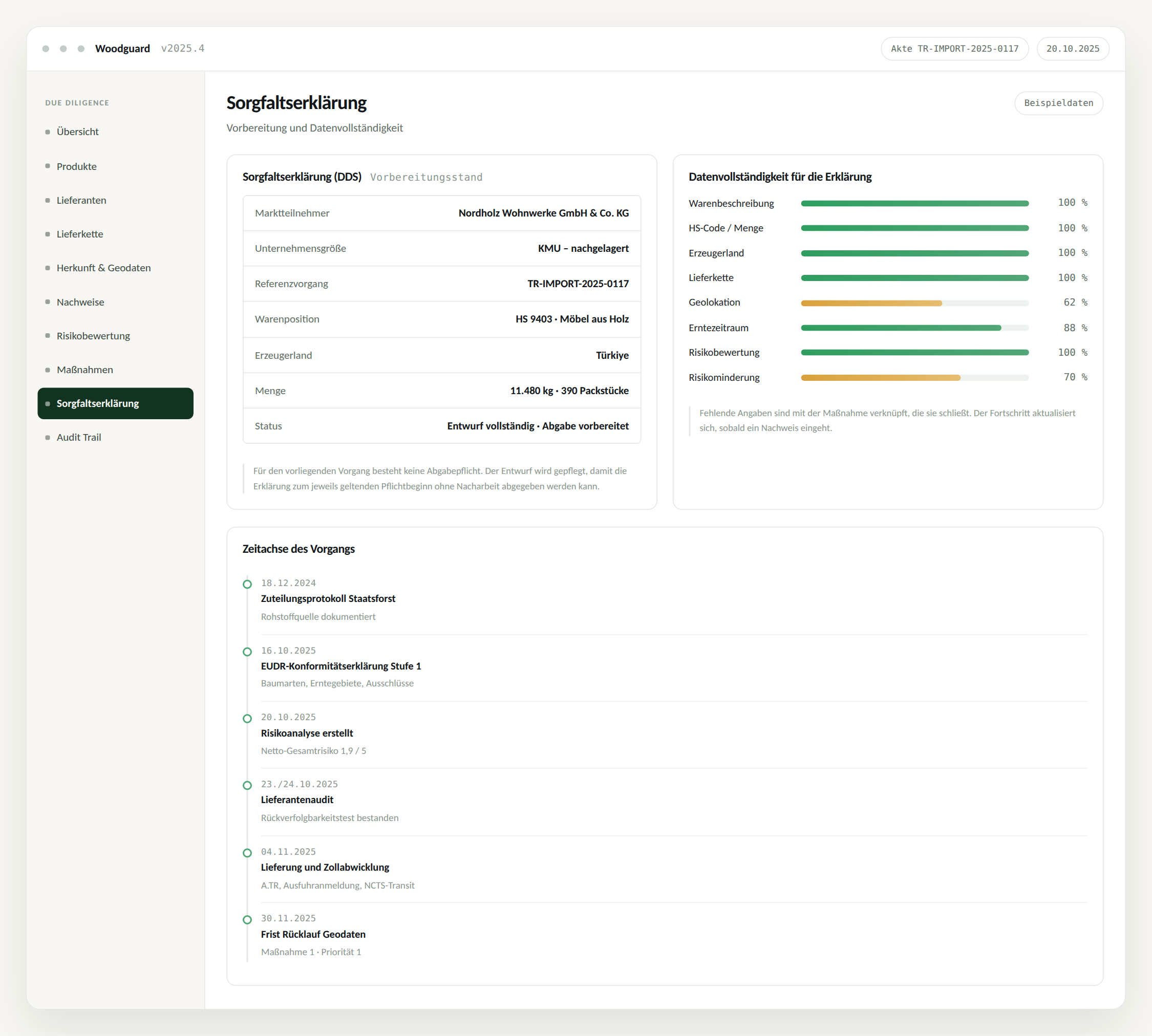
Preparing the due diligence statement
The data for the statement is built continuously, not shortly before submission. The progress bars show which fields are covered and which still depend on an open action.
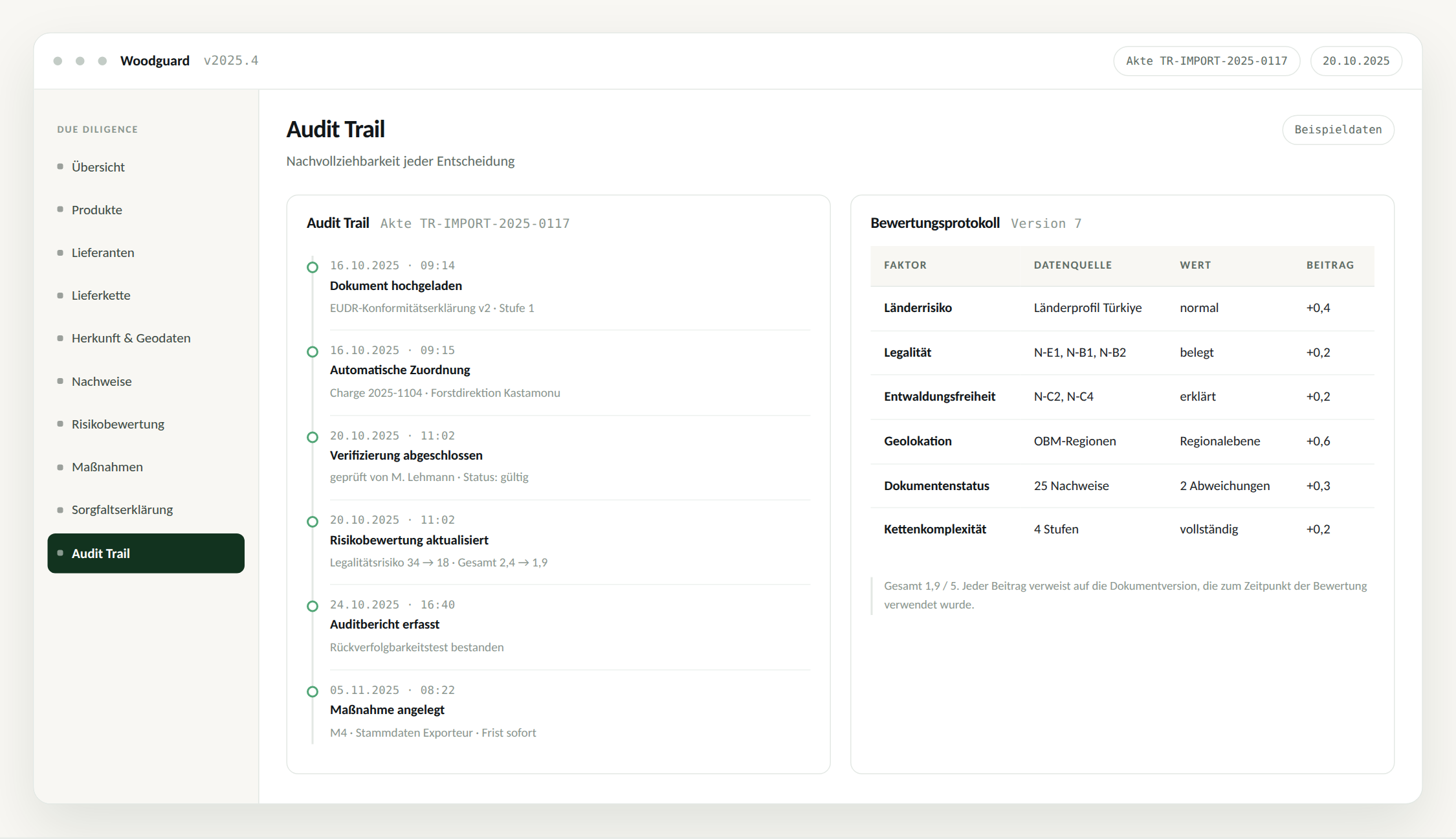
Audit trail and assessment log
Who changed what and when, which document version fed the analysis, how the value moved – and how much each factor contributed. Two years later the decision is still traceable.
This case study illustrates the software. Companies, register and certificate numbers, quantities, coordinates and assessments are fictional and describe neither a real transaction nor a real company. Woodguard supports companies in organising, documenting and assessing their due diligence. Legal responsibility for complying with the EU Deforestation Regulation remains with the respective company or operator. The risk score is an assessment produced within Woodguard and is not an official or legally prescribed value of the European Union.
Contact
Questions about the platform, pilot projects or working together? We usually reply within one business day.
Unit Area 199, Alquisaidat Nakheel
Ras Al Khaimah
United Arab Emirates
Know your wood. Know your risk.
Bring your EUDR due diligence into one single, traceable digital process.
Woodguard turns EUDR data into continuous risk intelligence.